Tuesday, April 30, 2019

Monsters and Minorities: Are They the Same? By: Imran Blackall


            The Encyclopædia Brittanica defines minorities as a culturally, ethnically, or racially distinct group that coexists with but is subordinate to a more dominant group. An interpretation that can be made after reading Dracula and Dead Until Dark as well as watching True Blood is that vampires are classified as minorities. From the isolation that Dracula and Bill experience to the accusations and stereotyping by other characters, it seemed that vampires do not get all the luxuries of immortality; rather, their immortality is combined with the negative connotations of minorities that made their lives miserable. These negative connotations of minorities exist today and cause greater separation and hatred among all races.
            In Bram Stoker’s Dracula, it was quite evident that Dracula was the odd one out. When the reader is introduced to Dracula, he lived in Transylvania in current day Romania and set up a plan to live in Great Britain. Compared to Dr. Van Helsing, Mina, and Dr. Seward, who all originated from Great Britain, Dracula was the minority because he coexisted with them, the majority group. The British people feared Dracula because they did not have much information about him; only speculations surmised. Similarly, Americans fear Mexicans because of the speculations that the media distributes and labels as news. The media has the tendency to give inaccurate if not bias information regarding minorities living in the United States to promote their agendas. Though it might help with their goals, it hinders the reputation of Mexicans and classifies them as bad people like Dracula. In addition, Dracula represents minorities for he lived in constant fear. Though he was quite strong during the night, the daytime was his kryptonite. Thus, Dracula shapeshifted as a coach driver when he first met Jonathan Harker as well as a dog when he was traveling to Great Britain by boat. He also isolated himself when he lived in both of his estates in Transylvania and Great Britain. This fear parallels with the fear that minorities experience living in America specifically African Americans in which they are constantly afraid and attempt to hide when they are confronted by police officers.
            In Dead Until Dark, Bill represented the minorities because he was classified with the new race of vampires existing with the living people. Living people constantly despised his existence especially when dining at Merlotte’s; no one wanted to sit, eat, or converse with him. During the mid to late 20th century, African Americans also experienced that same but in a more aggressive manner where signs mentioned segregation. Though this extremism has decreased over time, the feeling of forced separation among races remains. It was also peculiar to see how extreme vampires (Diane, Liam, and Malcolm) despised Bill, who was attempting to mainstream into society. They hated the idea of submitting to the majority through mainstreaming and were constantly wreaking havoc in Bon Temps. ISIS is like the extreme vampires in which they hate Western culture. They also hate other Muslims who accept Western culture and modernization and will kill them to implement fear within Muslims.
            In True Blood, living beings represent the majority, and they dislike the minority vampires. Sam, the owner of Merlotte’s, discussed with Sookie that he wished vampires including Bill who was mainstreaming had their own bars and restaurants. This demonstrated that the idea of segregation still lingers today though it had been abolished in the United States for decades. Moreover, when Arlene talked to Sookie, she stated that she did not want to serve Bill. Many small family-owned restaurants can decide which customers they can serve; thus, refusing to serve minorities exists. Lastly, all the living people in Bon Temps believed Bill caused the deaths. They assume it was him because he was the most present vampire in Bon Temps. Similarly, when terrorist attacks happen across the globe, Muslims are the first to be accused because of previous attacks such as the attacks in Paris and New Zealand.
            Overall, I believe vampires represent today’s minorities who are constantly misjudged, ridiculed, and targeted. Violence, destruction, and pain can be avoided by avoiding these false accusations and further understanding the culture of minorities.

Monday, April 29, 2019

The New and Old Vampire: Evolution of the Monster

The Changing of the Monster
By: Gabby Nguyen

Throughout the class in which we have focused on vampires, we see the differences between the kind of old school vampire such as Bram Stoker’s interpretation of Dracula and Charlaine Harris’ version of her vampire. It seems as if there is an evolution of how the vampire develops, it is no longer a scary monster that comes to suck on human’s blood, but it is now portrayed as a sexy chiseled man or scantily dressed woman that is over sexual. The comparison between the modern age vampires is quite different from the one of Dracula’s day and age and I believe that this was to appeal to the audience as the writers Harris or Stephanie Meyer portrays their version of the perfect vampire to their readers. The evolving of monsters is still in continuation and is due to the fact that it will conform to what the readers or viewers believe is attractive, and this is what the author will base their writings off of.
            First we see that Stoker uses Dracula as a monster of horror, who holds his prisoners in a dark castle with the threat of him catching them snooping through his things. Dracula is seen as a figure that lurks in the darkness and is associated with darkness, which is a common theme between all characters that are evil. Stoker describes Dracula as “cold as ice, more like the hand of a dead man. His face is aquiline, with a high bridge, thin nose, and arched nostrils” (Stoker 24). And then the film adaptation holds this description true, with a high forehead and red lips, trying to give the audience the visual of what evil looks like. What was kept similar with the evolution of the vampire from Dracula to Bill Compton in Dead until Dark was the reoccurring theme of sexual tones and the interactions between the characters.
            In continuation in talking on the theme of sexual interactions as well as the communication between characters, we see that Sookie and Bill seem to have some type of sexual tension between them, or at least how Harris wrote her books, that is what she intended for her readers to catch on. However, the differences between Dracula and Bill is that Bill is more possessive of Sookie. Dracula was possessive in the way that he just wanted Mina for blood but Bill has an attraction towards Sookie and claiming her as his own. It also is different that in some way, Harris writes more about sex and is more explicit about it than Stoker was. She uses Bill as a sexual symbol as well as the other vampires in the novel and in the show True Blood. And even though Dracula is desired by Mina and Lucy, Bill and the other vampires have their own fan club, the fang-bangers. These people WANT to be bit by the vampires because it gives them pleasure to the point that they will end up dying because of it. I believe that the modern day vampire is more desirable than the era of Dracula because authors make them seem more attractive with the uses of imagery and the ideal man.

            Overall, the changing and growing of monsters is still in continuation. Authors intend to appeal to their readers and directors of shows want consistent viewers. And the way to do this is to keep with the culture of what is popular. And I believe that in the era of Dracula, the appeal was for that intended audience, but Dracula was actually a monster who was preying on women, where in Dead Until Dark, Bill is a vampire who wants to protect a woman he loves and just because he is a so called monster, this comes to his advantage due to his good looks and charm. I am excited to see the further evolving of monsters through books and film adaptations based on how the culture is during that time.

Sunday, April 28, 2019

A Traumatic Childhood Takes its Toll


A Traumatic Childhood Takes its Toll
By: Shelby Bagby
Image result for slut shame

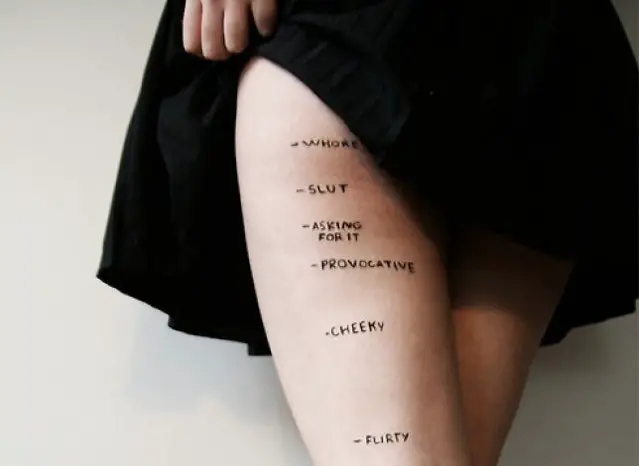
While it’s easy to label Sookie as judgmental and disapproving of the other women in this novel, it is important that the reader have some empathy for her, a victim of sexual abuse. How should one cope with being sexually abused by a close family member? Is there really a perfect way?
Of course, there is no perfect way to react losing both your parents in a flash flood and being sexually abused by your uncle. However, given the comments stated during class, it is evident that most of the class does have an opinion about her behavior. Sookie has definitely found her own way of coping with her horrendous childhood, but unfortunately, she has found a negative outlet: she slut-shames. She’s relentless as she calls out the imperfections of others and their choices. I can almost picture Sookie’s disgusting glance toward Diane as she tells the reader that she “could count her pubic hairs if [she] so desired” as a result of her form-fitted clothing (162). Perhaps Sookie’s shaming of other women can be seen as the defense mechanism, projection, or putting unwanted feelings and emotions onto others. It’s possible that Sookie has a low self-esteem due to the relationship that she had with her uncle, and the way that she deals with that issue is by putting those negative thoughts onto others. She might think her own wardrobe is too tight, so instead of dealing with those thoughts, she harps on Denise for wearing “short shorts,” negatively commenting that “Denise wasn’t truly pretty, but she was so flashy and confident that it took a while to figure that out” (4). Maybe Sookie feels that way about herself. Maybe she believes that she lacks confidence, isn’t that pretty, and her own clothes are too tight. As a result, when she sees Denise with all the confidence in the world, she tears her down: a mix of projection (clothing) and jealousy (confidence).

Her lack of self-confidence could also be what leads her into a heated relationship with Bill, the new town vampire who is mainstreaming into society. Despite knowing that vampires are known for their “sexual potency,” she immediately recognizes when he crosses a line when he tells her that “there’s a juicy artery in [her] groin” (13). She shuts down his risqué comments quickly: “Don’t you talk dirty…I won’t listen to that” (13). However, once she becomes committed to Bill and their relationship physically advances, she finds herself in a grey area. She knows that she “[doesn’t] want to disappoint [him] sexually” but she also knows when she’s had enough (154). After Bill tries to heal Sookie with his blood, she tries to end the intense moment with a simple “Thanks” (156). Apparently, Bill did not understand what Sookie was trying to communicate or refused to acknowledge her lack of interest, because “he didn’t remove his finger” (156). Why does the reader not empathize with Sookie when it appears that Bill is not acting in accord with Sookie’s consent, or lack thereof?

If the reader calls Sookie judgmental, doesn’t that make the reader judgmental? I agree that Sookie’s methods for dealing with her past are not admirable: she’s jealous of other women, shines a negative light on their imperfections, and projects her feelings onto others. However, if the reader were to judge Sookie for acting that way, the reader wouldn’t be much better than Sookie.


Monday, April 15, 2019

Comparison between Bram Stoker’s Dracula and Coppola’s Dracula


Bram Stoker’s Dracula portrays the popular thoughts and beliefs of the conservative Victorian era whereas, Coppola’s film Dracula depicts the views of the liberal time. The characters and the plot in Bram Stoker’s Dracula contained hidden sexuality as men and woman in the Victorian era had to follow certain expectations. However, the film based on the novel Dracula by Francis Ford Coppola created in the liberal time emphasized on expressing the sexuality that was hidden in the novel.
The most significant difference between the Bram Stoker’s Dracula and Coppola’s film Dracula is in the relationship and interactions between the Dracula and Mina. In Bram Stoker’s Dracula, there is no love or affection between Dracula and Mina. Whereas, in Coppola’s film Dracula and Mina love each other because they believe Mina is the reincarnation of Dracula’s dead beloved, Elisabeta. The theme of the original novel is the fight between the good souls and evil power. However, the alteration of the story to a love story in the film to impress the audience resulted in the loss of the original theme. Similarly, in Bram Stoker’s Dracula, Mina is forced to drink Dracula’s blood and is portrayed as helpless and terrified. However, in the movie, Mina is given a choice to decide whether or not to drink his blood and she chooses to drink Dracula’s blood. Moreover, Dracula reveals that he loves Mina so much to let her be condemned to live the life he does. Thus, the movie shows the unconditional love between Dracula and Mina. Furthermore, Mina is portrayed as easily seduced in the movie. On the other hand, the novel portrays Mina as loyal to Jonathan and she hated Dracula for what he did to Lucy.
    Moreover, a woman kissing or having a sexual desire with more than one man was unacceptable during the Victorian era. Bram Stoker displays Mina as a devoted and loyal wife who studies shorthand to help Harker and helps Harker recover from his illness. Mina uses her natural maternal instinct to make the men around her feel better. Bram Stoker also portrays Lucy as one who desires to marry three men but is only legally allowed to marry one as seen “Why can’t they let a girl marry three men or as many as want her, and save all this trouble? But this is heresy, and I must not say it” (Stoker 91). Whereas, Coppola portrays both Mina and Lucy as women with sexual desires with more than one man. Mina is shown to have an affair with both Harker and the count. In one scene, Mina’s extreme sexual desires were displayed when she says “Yes my love, you’ve found me. I have wanted this to happen, I know that now. I want to be with you always.”
    Victorian readers wouldn’t have accepted Coppola’s ideas. They would’ve considered both Mina and Lucy as unfaithful. However, Coppola’s audience of the Liberal time will accept both Mina and Lucy from the film as women who has their own opinions and act on their will.


Sookie's Real Disability

Sookie's Real Disability Sookie Stackhouse calling her superpower a disability is universally annoying and self-pitying, but what de...